When your air conditioner starts acting up, it’s not always clear what to do next. Should you schedule a tune-up? Or is it time for a repair? Many homeowners wait until their system stops working before calling for help. That approach often leads to higher costs and greater stress. The better option depends on what your system is telling you.
Performance Stability vs. Performance Loss
Start with how your system performs every day. If your air conditioner cools your home evenly, reaches the thermostat setting, and runs without interruption, you likely need maintenance rather than repairs. Your system works. It simply needs professional cleaning, inspection, and adjustment to keep operating efficiently.
If your air conditioner struggles to reach the set temperature or blows warm air, you need professional air conditioner repairs. Cooling performance should not decline without a reason. Something inside your system has likely failed or fallen out of its correct settings.
Maintenance improves how a functioning system runs. Repair restores lost function.
Gradual Decline vs. Sudden Change
The timeline of the issue can help you make the right choice. When you experience sudden changes, maintenance often solves the problem. You may notice slightly higher energy bills, or the system may run longer during hot afternoons. The airflow may seem a little weaker than last year. These are common symptoms of coil buildup, reduced airflow, or minor electrical issues. A professional AC tune-up addresses these issues before they cause breakdowns.
Sudden changes rarely mean a maintenance issue. If the unit was cooling properly yesterday and now blows warm air, something failed. If it shuts off unexpectedly or trips a breaker, that isn’t normal wear and tear. It’s a sign that your AC needs repair.
Gradual declines almost always suggest maintenance needs. Immediate system failures require professional correction.
Energy Use and Efficiency Concerns
Your utility bills can show problems before your air conditioner breaks down. If your cooling costs rise even though your usage habits stay the same, efficiency has dropped. Dirty condenser coils force the system to work much harder than it should. Additionally, low refrigerant levels reduce heat transfer. Finally, it’s also important to realize that restricted airflow can strain the blower motor, leading to premature failure.
In many of these cases, the system still cools the home, but it does so inefficiently. That is where our maintenance services provide true value. A thorough cleaning and calibration can restore proper operation and reduce energy waste.
However, if your energy bills spike suddenly and your comfort declines at the same time, the problem may extend beyond a maintenance fix. You could have a failing compressor or refrigerant leak that requires repair. Efficiency and performance usually decline together when a mechanical component fails.
Airflow Changes and Comfort Balance
Walk through your home from time to time and evaluate the airflow at the vents. Weak but steady airflow often indicates a buildup of grime in your system. Dirty evaporator coils, clogged condensate drains, or minor obstructions gradually reduce your system’s performance. A maintenance visit typically identifies and corrects these issues.
Uneven airflow between rooms could signal an airflow issue rather than a mechanical failure. On the other hand, if airflow stops entirely or varies wildly, you may have a blower motor or capacitor failure. If you hear strange noises coming from the indoor unit and changes in airflow, you likely have a repair issue.
Consistent but reduced airflow leans toward maintenance. Intermittent or absent airflow indicates you need AC repairs.
Unusual Sounds and System Behavior
Air conditioners operate with a steady, controlled rhythm. You shouldn’t hear grinding, screeching, or sharp banging.
Light rattling sometimes results from loose fasteners or panels. Maintenance often resolves those minor issues.
Electrical buzzing, hard starts, or metal-on-metal grinding indicate mechanical or electrical failure. These sounds rarely correct themselves and usually worsen over time with greater damage.
If your system suddenly has different sounds overnight, schedule a repair. If it simply sounds a little bit noisier than when you used it last year, schedule maintenance. Sound changes provide some of the clearest signs of internal trouble.
Refrigerant-Related Signs
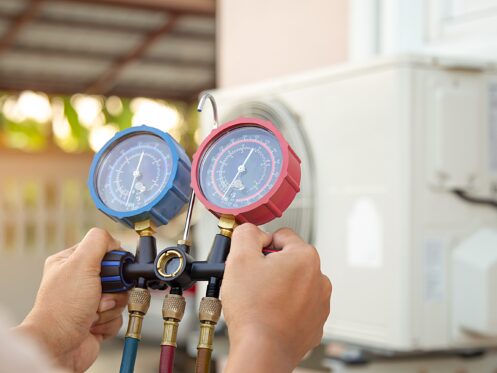
Refrigerant issues make it more challenging to determine if your system needs maintenance or repairs. Low refrigerant levels can result from small leaks. In that case, a repair becomes necessary to seal the leak and recharge the system.
However, improper refrigerant levels can also stem from seasonal fluctuation or minor imbalances that maintenance can correct during an inspection. It’s important to pay attention to the signs.
Ice on the refrigerant lines, warm air from vents, or extended run times usually mean you have a leak. That requires more than cleaning; it needs repair.
Refrigerant problems can quickly affect your system’s cooling ability. If your comfort drops significantly, move directly to diagnostic services.
System Age and Service History
If you schedule yearly maintenance and the system still performs well, continue that schedule. Preventive care goes a long way towards sustained reliability.
If you’ve skipped service for several years and performance has started declining, maintenance is your first logical step. Many issues come from system neglect rather than mechanical failures.
Maintenance works best on systems that are still structurally sound. Repair addresses parts that have already failed due to age or stress.
Your Financial Perspective and Long-Term Value
Some homeowners hesitate to schedule because their system still runs. Others avoid repair in hopes that a tune-up will fix all their problems. Both of these approaches carry risks.
Skipping maintenance increases the chance of breakdowns during peak summer heat. Waiting for repairs often leads to greater component damage. A failed capacitor can damage your motor, and a refrigerant leak can destroy your compressor. These are not repair expenses you want to face.
Maintenance costs less because it prevents damage. Repairs cost more because they correct the problem. The smartest financial strategy involves a combination of both. Schedule annual tune-ups to reduce wear and tear on your system. Address repairs promptly to prevent problems from escalating.
What a Professional Evaluation Provides
Even with clear signs, some situations require both maintenance and repairs. High humidity indoors may result from minor calibration issues or a malfunctioning component. Only a complete system inspection reveals the difference.
At John Henry's Plumbing, Heating, Air, and Electrical, our technicians evaluate performance, airflow, electrical readings, and refrigerant levels before making recommendations. We focus on diagnosing the root cause rather than treating symptoms.
If maintenance restores proper operation, we complete the service efficiently. If repairs become necessary, we explain what failed and why. You receive clear information before making a decision.
Choosing the Right Service With Confidence
Your AC system communicates through performance changes, energy use, airflow, and sound. When you know how to interpret those signals, the decision becomes clearer. Maintenance keeps healthy air conditioners strong. Repair restores a struggling one. We can help you determine which one your system needs to keep you cool and comfortable throughout the summer months. At John Henry's Plumbing, Heating, Air, and Electrical, we help local homeowners make informed decisions about their HVAC systems. We help you avoid the guesswork with our professional HVAC installation, maintenance, and repairs.
Contact John Henry's Plumbing, Heating, Air, and Electrical today to schedule your air conditioner tune-up in Lincoln.