Power outages are typically unexpected. A strong summer storm rolls across Douglas County, or ice builds up on power lines in the winter. High winds sweep through the area, and suddenly, neighborhoods in the area lose power. When this situation happens, your home can go from comfortable to stressful quickly. Soon, you realize how much your home depends on reliable electricity.
What a Portable Generator Offers
Portable generators are popular in many Omaha homes. These movable units stay stored in your garage or shed until you need them. When the power goes out, you move it outside, start it, and connect appliances or circuits that you want to power.
Portable generators typically run on gasoline, though some models use propane. They provide temporary power for essential items such as refrigerators, lights, small appliances, and sometimes, a sump pump.
The main advantage of a portable generator is cost. The upfront investment is lower than that of a standby system. For homeowners who experience occasional outages, that affordability makes it appealing.
Portability also adds flexibility. You can use the unit at home, take it on a camping trip, or lend it to a family member during an emergency.
However, portable generators require active management. You must refuel them regularly. You must also monitor them while they operate.
You must position portable generators outdoors, at a safe distance from doors and windows, to prevent carbon monoxide risks. If an outage occurs overnight or while you’re away, the generator won’t start until someone sets it up.
Portable units also limit how much of your home you can power at one time. You often need to prioritize which appliances will run and avoid overloading the system.
Understanding Standby and Whole-Home Generators
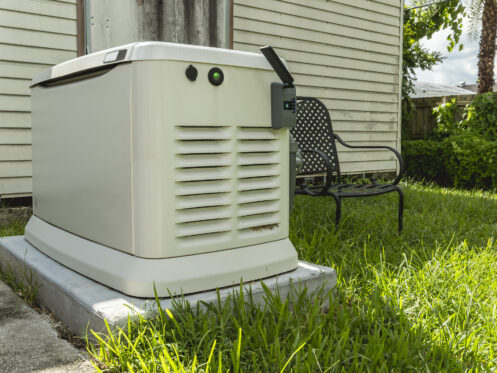
Standby generators operate very differently. We permanently install these units outside of your home and connect them directly to your electrical panel and fuel source.
When grid power fails, a standby generator detects the outage and turns on automatically. Within seconds, electricity flows back into your home. When utility power returns, the generator shuts off and waits for the next event.
Many standby systems qualify as whole-home generators because they can power your entire house rather than just a few selected circuits. Depending on the model and size, you can continue using heating and cooling equipment, kitchen appliances, lighting, and electronics without major interruption.
Most standby units run on natural gas or propane. They draw fuel directly from your home’s supply, which eliminates the need for manual refueling during an extended outage.
Comparing Power Capacity and Coverage
Capacity plays a major role in choosing between portable and standby systems. Portable generators provide limited wattage. They support critical appliances, but they require careful load management. Running a refrigerator, microwave, and space heater simultaneously may overload a smaller unit. You must turn off one appliance before using another.
Standby generators offer higher wattage and broader coverage. Many models support central air conditioning, furnaces, multiple refrigerators, and additional household circuits simultaneously. A properly sized whole-home generator restores power to nearly every outlet and appliance in your home.
In Omaha, where summer humidity and winter cold create real comfort challenges, maintaining HVAC operation during an outage is important. A standby generator can keep your heating or cooling system running without interruption.
If your home includes a finished basement with a sump pump, a home office, or medical equipment, uninterrupted power carries even greater value. It’s important to evaluate your home’s needs with a professional to ensure you make the correct choice.
Safety and Installation Considerations
Portable generators require careful handling. Improper placement can allow carbon monoxide to enter your home, creating a serious hazard.
Connection also matters. Plugging appliances directly into a generator using heavy-duty extension cords works for small loads. Connecting a portable generator to your home’s electrical system requires a transfer switch to prevent backfeeding electricity into utility lines. Backfeeding endangers line workers and damages equipment.
Standby generators address many of these concerns because they integrate directly into your electrical panel through a professionally installed transfer switch. The system isolates your home from the grid automatically during an outage.
Professional installation ensures that the generator meets your home’s electrical demands and complies with local codes. This process involves proper wiring, fuel line connections, and system testing for safe, reliable performance.
Maintenance and Long-Term Reliability
Both generator types require maintenance, but the approach differs. Portable generators need oil changes, fuel stabilization, and periodic testing. Gasoline must always remain fresh. If the fuel sits too long, the generator may fail to start during an emergency.
Standby generators conduct automatic self-tests on a regular basis. These systems often run brief weekly checks to confirm readiness. Annual professional maintenance keeps components clean and calibrated.
Because standby generators connect permanently to a fuel source, they eliminate the challenge of storing and rotating gasoline. That reliability proves valuable during extended outages caused by severe storms or ice accumulation.
John Henry's Plumbing, Heating, Air, and Electrical provides professional generator services to keep standby systems operating efficiently. We can help you determine the best system setup for uninterrupted power during outages. Routine service ensures that your investment performs when it matters most.
Cost vs. Convenience in Omaha
Budget plays a role in every home improvement decision. Portable generators require a smaller upfront investment. For homeowners who experience infrequent outages, the lower cost may align with their needs.
Standby whole-home generators require a higher initial investment due to equipment size and professional installation. However, they deliver greater convenience, broader coverage, and automatic operation.
In Omaha, weather patterns can shift quickly, and outages sometimes last for a long period of time. Many homeowners view standby systems as long-term protection rather than a short-term solution.
A standby generator also adds appeal to your property. Prospective buyers often recognize the value of whole-home backup power in regions prone to severe weather. When evaluating cost, consider not only the purchase price but also the level of protection and peace of mind you receive.
Choosing What Fits Your Household
Every home operates differently. A smaller household with minimal power demands may find a portable generator sufficient. It keeps the necessities running until utility service returns.
Larger households often require more comprehensive coverage. If you rely on consistent internet for remote work, operate medical devices, or want uninterrupted heating and cooling, standby systems are the better option.
Lifestyle also influences your decision. If you travel frequently, a portable generator offers no protection while you’re away. A standby generator activates automatically, maintaining essential systems such as sump pumps and security systems.
Think about how much disruption you are willing to tolerate during an outage. If manual setup and fuel management feel acceptable, a portable unit may work. If you prefer seamless restoration of power, a standby generator makes more sense.
Professional Generator Services Make All the Difference
Portable generators serve a purpose. Standby whole-home generators deliver comprehensive protection. The better option depends on how much reliability you want and how you use electricity in your daily life. We provide a full range of electrical services to area residents.
If you are ready to explore generator options in Omaha, contact John Henry's Plumbing, Heating, Air, and Electrical today to schedule an appointment.