
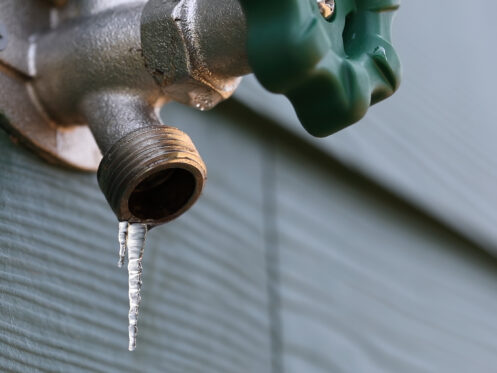
Omaha’s cold weather can wreak havoc on your home’s plumbing system, resulting in frozen pipes and water damage. You see, when water inside a pipe freezes, it expands, putting pressure on the pipe walls. That pressure can lead to cracks or even burst pipes, which often result in expensive repairs and water restoration services. The good news is that you can avoid this winter-weather plumbing problem, by spotting the warning signs before things get out of hand. In this post, we walk you through the five steps you must take to help you identify frozen pipes, along with advice on what to do if you suspect a problem and how to prevent it from happening again.
1. Look for Reduced Water Flow
One of the earliest and most obvious signs of frozen pipes is low water pressure. If you turn on a faucet and only a small trickle comes out during the winter months, that’s a strong indicator that ice is blocking the pipe. Sometimes the flow of water stops completely, which means the pipe is fully frozen. If only one faucet is affected, the freeze is likely in a single pipe.
However, if multiple fixtures are struggling to produce sufficient water flow, the problem may be larger and involve several pipes. Although reduced water flow might seem like nothing more than a mere inconvenience, it’s a warning that pressure is building inside the pipe. Ignore the warning and the pressure can lead to a burst pipe if you don’t address it right away.
To prevent frozen pipes, think about the areas of your home most vulnerable to cold. Pipes near exterior walls, in basements, or in unheated garages often freeze first. If you notice weak water flow in those areas, take it seriously. Acting early can save you from costly repairs and protect your home from water damage.
2. Check for Frost on the Pipe Surface
Another clear sign of frozen pipes is visible frost or ice on the outside of the pipe. Exposed pipes in basements, crawl spaces, and garages are easy to inspect. If you see frost forming on the surface, you can assume the water inside is frozen. Even a thin layer of frost is enough to signal trouble. Pipes that run along exterior walls or near drafty windows are especially at risk. The longer the pipe stays frozen, the greater the chance of it cracking under pressure.
Take a few minutes to walk through your home during cold snaps. Check exposed pipes and look for frost. A quick visual inspection can give you valuable clues before the situation gets worse. If you spot frost, don’t ignore it. That pipe is already in danger, and waiting could lead to a burst.
3. Listen for Strange Noises
Imagine turning on your kitchen faucet and hearing a loud clank from the basement. Frozen pipes often make unusual sounds when you turn on the water. You might hear banging, clanking, or gurgling noises as the ice shifts inside the pipe. These sounds happen because water is trying to push past the blockage. Sometimes the noises are faint, but other times they’re loud enough to catch your attention right away. If you hear odd sounds along with reduced water flow, it’s a strong sign that ice is present.
4. Inspect for Unusual Odors
Odors are often overlooked, but they can be an important warning sign. When water can’t flow freely, waste and gases may linger in the pipes, creating smells that drift back into your home. Frozen pipes are not an exception. They block normal drainage, which may cause unpleasant smells to back up into sinks or drains. If you notice strange odors coming from your fixtures during cold weather, it could mean ice is preventing water from moving through the system.
5. Investigate Cold Spots Along the Pipe
If you can safely reach exposed pipes, gently touch them to check for extreme cold sections. A pipe that feels much colder than others nearby may have ice inside. Be careful not to apply too much pressure, since frozen pipes can be fragile. Identifying cold spots can help you pinpoint where the freeze is happening. Utilizing this troubleshooting method is especially useful in basements or crawl spaces where pipes are accessible.
What to Do If You Suspect Frozen Pipes
If you believe your home’s pipes are frozen, we caution you against trying to thaw them yourself. Using open flames, space heaters, or other DIY methods can cause damage or even start a fire. The safest step is to call a professional plumber. We have the right tools and experience to handle the situation. The professionals at John Henry's Plumbing, Heating, Air, and Electrical use safe methods to thaw pipes and can check for cracks or leaks that may have already formed.
Acting quickly is important. A frozen pipe is more than just an inconvenience. It’s a potential emergency. By calling us right away, you’ll reduce the risk of a burst and protect your home from water damage. Remember, frozen pipes can lead to costly repairs if ignored.
How to Prevent Frozen Pipes
The best way to deal with frozen pipes is to stop them from freezing in the first place. So how do you do this? Here are a few steps you can take to better prepare your home’s pipes for the winter weather:
- Insulate exposed pipes
- Keep a steady indoor temperature
- Allow faucets to drip during extreme cold
- Seal drafts around windows and doors
- Open cabinet doors to let warm air reach pipes
- Disconnect outdoor hoses before winter
- Close garage doors to keep cold air out
Each of these steps helps protect your plumbing system. Insulation keeps pipes warm, steady indoor temperatures prevent sudden freezes, and dripping faucets relieve pressure inside the pipes. Sealing drafts and opening cabinet doors allow warm air to circulate, reducing the risk of ice forming. Disconnecting hoses and closing garage doors are simple tasks that make a big difference. By preparing your home before the coldest days arrive, you’ll reduce the risk of frozen pipes and keep your plumbing system running smoothly.
The fact is that frozen pipes can cause serious problems. They can severely damage your home’s infrastructure and require extensive water damage restoration. Not only do you have the expense of repairing the pipe, but you also need to hire professionals to redo drywall, baseboards, etc. In severe cases, you might even need to replace furniture and other items that were affected by the water.
Fortunately, when you know the signs of a frozen pipe and take preventive steps you stay ahead of the issue. If you suspect your pipes are frozen, don’t wait for them to burst. Reach out to us for professional plumbing services. We provide heating and air solutions to keep your home comfortable all year long. Contact John Henry's Plumbing, Heating, Air, and Electrical today for more information and let us help you protect your home from Omaha’s winter challenges.