There’s no doubt that tankless water heaters have become increasingly popular throughout the country. Their high energy efficiency, compact design, and ability to produce an endless supply of hot water on demand make them a popular choice for homeowners. However, if you live in Nebraska, where temperatures routinely plunge below freezing, you may be wondering if a tankless water heater will work for you.
How Do Tankless Water Heaters Work?
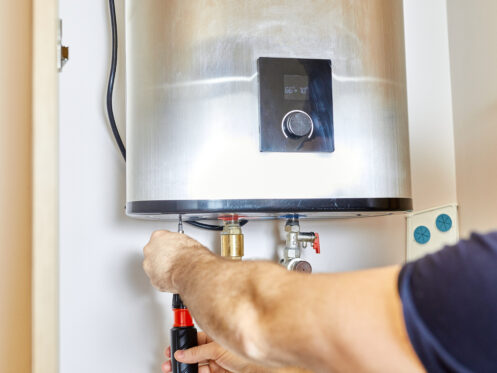
Most homeowners are familiar with traditional water heaters. These units have a cylindrical storage tank that heats up water continuously until you need to use it. Tankless water heaters function much differently from traditional water heaters. Instead of storing hot water until you need it, they only heat water as it travels through your hot water line on the way to your plumbing fixtures.
This ensures that your water heater only turns on when you actually need hot water. This is one of the biggest advantages of tankless water heaters, as they eliminate standby heat loss. They’re a more energy-efficient model that can supply an endless amount of hot water for you and your family.
Incoming Water Temperature
One thing to keep in mind about the performance of a tankless water heater is that it must make up the temperature difference between your desired temperature and the incoming water temperature. During the winter months, the incoming water temperature for your home can be much cooler than during the summer.
This means that your water heater has to work harder to increase the temperature of the water more significantly than during the summer months. To put this into comparison, incoming water for warmer states is around 55 to 65 degrees Fahrenheit. When temperatures drop during cold spells in Nebraska, the incoming groundwater temperature can be in the mid-30 to 40-degree range.
Proper Sizing Is Critical
One of the key things to keep in mind about using a tankless water heater during Nebraska’s cold winter is that it needs to be appropriately sized for your home. All tankless water heaters are rated based on how much hot water they can produce in a given minute. This is commonly described as a flow rate.
Each flow rate is given based on a specific temperature rise that the unit can handle. Temperature rise describes the difference between the incoming water temperature and the outgoing temperature to your plumbing fixtures. For example, many homeowners set their water heater temperature at 120 degrees.
With an incoming water temperature of 40 degrees during the wintertime, your unit needs to achieve an 80-degree temperature rise to meet your temperature demands. This is significantly more than during the summer when, say, the incoming water temperature is 60°, and your unit only has to make up a 60-degree rise. It’s imperative to choose a tankless water heater that can achieve your desired rise during the winter months to ensure you have adequate hot water in your home.
Gas vs. Electric Models
Tankless water heaters can run on natural gas, propane, or electricity. One thing to note between electric and gas-powered water heaters is that electric units have a lower heating capacity compared to the gas models. Most electric tankless water heaters will experience a significant decrease in their flow rate during the winter months, usually producing between two and five gallons of hot water per minute.
While this is enough for smaller homes and apartments, it’s not ideal for an average or larger home. Larger homes will need gas-powered tankless water heaters, which have a significantly higher heating capacity and flow rate. These are better suited to handle the flow rate decrease during the winter months. Most gas units can deliver between 7 and 11 gallons of hot water per minute, depending on your incoming water temperature.
Why Professional Installation is Key
If you decide that you want to invest in a tankless water heater for your Nebraska home, it’s important to have professional installation. Our plumbing professionals will appropriately calculate a few different factors to ensure a properly sized unit for your home. These include the coldest expected incoming water temperature, the number of fixtures you plan on using at the same time, the required temperature rise, and your home’s peak hot water demand.
Some larger homes may even need multiple units installed in parallel to provide a consistent amount of hot water during the colder season. Our plumbing professionals can set up your system to ensure you always have an adequate supply of hot water in your home, even during the harshest part of the winter season.
Special Installation Requirements
Water heater installers will take special considerations into account when putting a tankless water heater in your Nebraska home. We typically install larger gas supply lines that support a higher BTU demand for your water heater. We may need to increase the electrical line going to the water heater to ensure appropriate power for ignition and controls. We may also need to update your venting system for high-efficiency models and install a condensate drainage pipe.
Maintenance Requirements
As with any new appliance you purchase for your household, it’s important to take into account its maintenance requirements to keep it in good working condition. When it comes to your tankless water heater, you need to get an annual inspection from one of our plumbing professionals. During this inspection, we do a few different things. We’ll flush any mineral deposits from your heat exchanger, which are very common in areas with hard water.
We’ll inspect the burner or heating element and ensure proper airflow and venting. We’ll also check the freeze protection features of your unit to ensure that they’re functioning optimally. This goes a long way in ensuring a long lifespan for your unit, optimal operating efficiency, and safety during the winter months.
Advantages of a Tankless Water Heater for Your Nebraska Home
Tankless water heaters can provide a plethora of benefits for your Nebraska home. They have a very compact design, which makes them great for mounting on the wall. They use much less living space than traditional water heaters because they don’t have a storage tank. Tankless units are much more energy-efficient, leading to lower utility bills for you. These units are also more eco-friendly than traditional water heaters.
Many homeowners love the ability of tankless units to produce an endless supply of hot water. There’s nothing worse than taking back-to-back showers with a conventional water heater and running out of hot water. With a tankless unit, you can enjoy a consistent stream of hot water to meet all your needs.
Professional Tankless Water Heater Installation Service
John Henry's Plumbing, Heating, Air, and Electrical offers professional tankless water heater installation service for Lincoln, NE. We can also assist with all your water heater repair, replacement, and maintenance needs. Call John Henry's Plumbing, Heating, Air, and Electrical today to schedule tankless water heater installation in Lincoln.